From July 28th to July 30th 2026
Practical
REGISTRATION IS OPEN
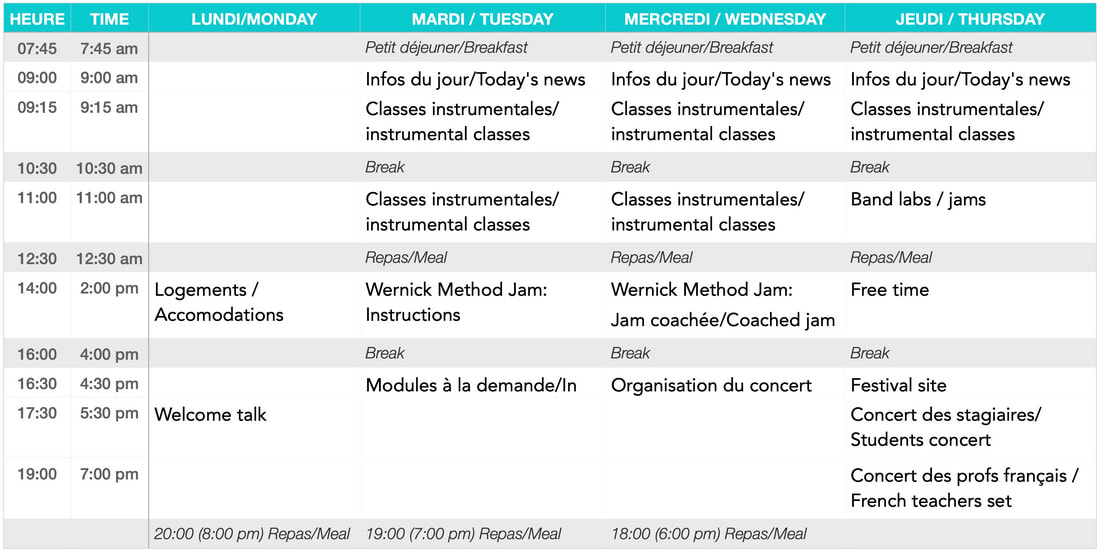
A 3-day teaching camp from Tuesday July 28 to Thursday July 30, 2026 with possibility of accommodation
The goal is to help you, whatever your level, improvise and take part in a Bluegrass jam with autonomy and confidence: "learn to play without being tied to tablatures!"
Workshop "band labs", formed during the workshop and coached by one of the tutors, kick off the festival on the main stage on Thursday.
The camp takes place at Lycée Sainte Famille, La Roche sur Foron (74800)
Limited to 120 participants with 100 available beds on site
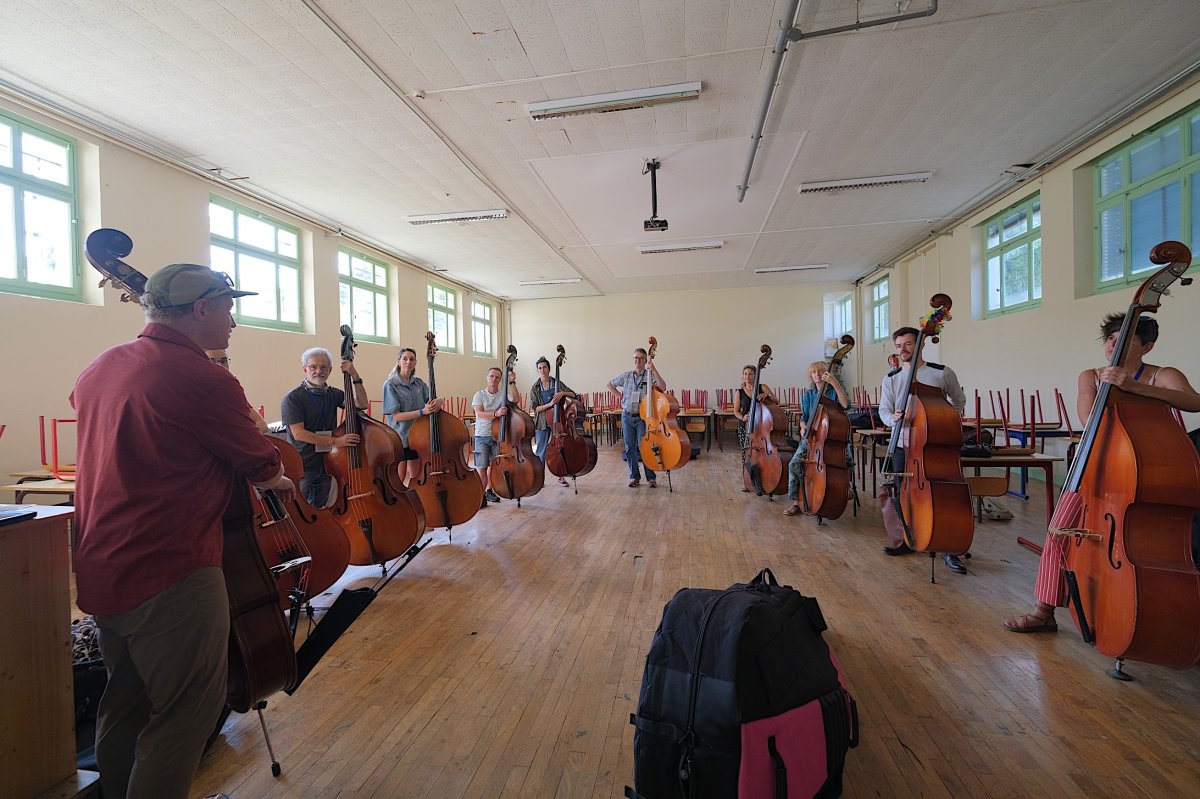
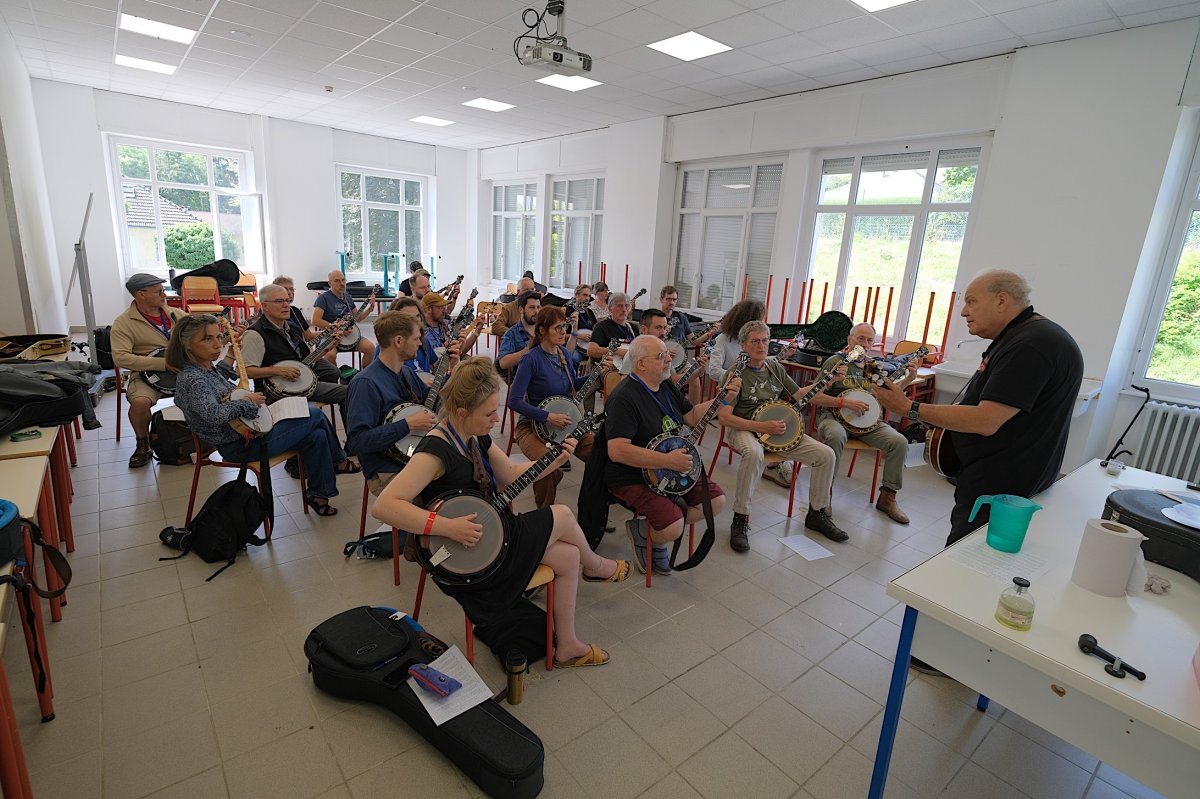
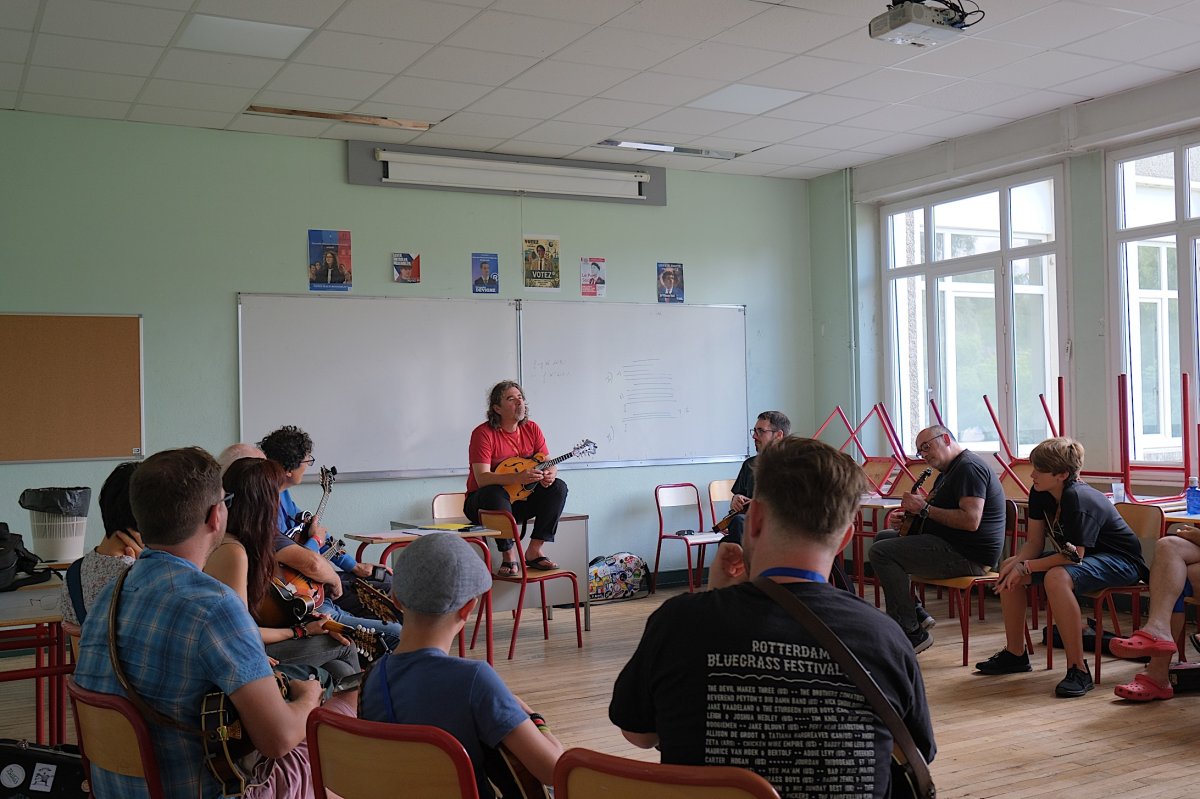
Morning : Instrumental Classes • Song writing
Afternoons : Wernick Method coached Jams • Bluegrass harmony singing • Band Labs
The school is open from 3 pm on Monday July 28 and there is a welcome drinks and dinner on Monday evening, hosted by the festival organisation.
Programme
The camp opens on Monday evening with a welcome drink and meal hosted by the festival organising committee with introductions by Festival Chair Christopher Howard-Williams and the Camp leader Gilles Rézard.
Timetable
The Wernick Method
The Wernick Method is part of the camp since 2023.
The students will have access to the bluegrass jam materials carefully prepared by Pete Wernick, to learn in the best conditions.
About the Workshops
This camp is not a discovery workshop: if you have never played an instrument before, you will need to get some practice beforehand. See the "Need To Know" tab.
It is intended for :
People who have their own instrument and have already started, even recently, in the bluegrass style or with at least some notions such as
- Quick tuning
- Accompanying in rhythm, at slow or medium tempo (60-70)
- Being able to change chords comfortably between G, C, D and A.
For experienced musicians who wish to take advantage of these three days and the festival to make significant progress, to take new references, to learn new notions, new pieces, to find new ways to improvise, arrange, sing...
In case of any doubt, please feel free to contact us.
Need to Know
Where the Music came from
1925 - 1945 : the slow maturing
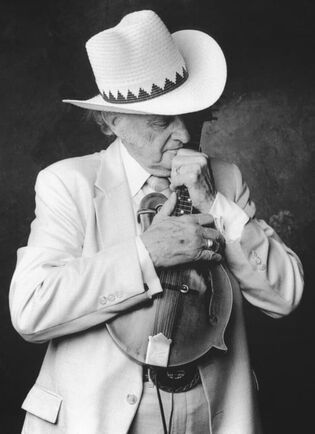
Bill Monroe, mandolinist of genius, is inspired by the most popular styles of the time with the idea to invent a new style.
The popular styles from which he was strongly inspired are :
- The gospel (and the religious music): it comes from a family of notables very practising
- The fiddle tunes : instrumentals imported by the Irish fiddlers, direct influence of his uncle : "Uncle Pen
- The blues : his best friend, Arnold Schulz, was an appreciated bluesman with whom he animated many balls,
- Ballads : songs with stories of British tradition, peddled in particular by the Carter Family,
- Western swing: huge commercial success, "American-style" shows, with superstars like Bob Wills. In 1938 was born from these various influences a group named by Bill Monroe: "The Blue Grass Boys".
1945: success at last!
After many evolutions, the success occurs finally thanks to the arrival in the group of a young guitarist with the perfect voice for the style: Lester Flatt, followed by a banjoist still unknown: Earl Scruggs.
This was the missing ingredient and the spark that set the world on fire!
After a historic performance on Nashville's main stage in 1946 at the Grand Ole Opry (now the Ryman), a veritable musical revolution took place.
During a few years, money flows and the bluegrass style starts to influence groups that will become legendary:
Jim & Jesse (1945), Stanley Brothers (1946), Flatt & Scruggs (1948), Jimmy Martin (1949), Reno & Smiley (1950) and Osborne Brothers (1953).
What to Listen to
The main bands, in chronological order:
1945 - 1960 (traditional bands) : Bluegrass Boys, Jim & Jesse, Stanley Brothers, Flatt & Scruggs, Jimmy Martin, Reno & Smiley, Osborne Brothers, Doc Watson, Country Gentlemen, Del Mc Coury, Kentucky Colonels, The Dillards.
1960 - 1980 (the innovatives): Seldom Scene, Bluegrass Cardinals, JD Crowe and new South, Doyle Lawson and Quicksilver, Bluegrass Album Band, Ricky Skaggs and Kentucky Thunder, Bluegrass Alliance, Country Cooking, Newgrass Revival, Country Gazette, Muleskinner, David Grisman Quintet, Hot Rize, Tony Rice Unit, Skyline.
1980 - today (modern bluegrass): Alison Krauss and Union Station, Nickel Creek, Alison Brown Quartet, Crooked Still, Punch Brothers, Billy Strings...
The jam favorites:
The bluegrass repertoire fortunately contains many 3-chord songs, with the same grid and sometimes the same melody between verse and chorus.
This is the place to start, especially if they are jam favorites with nice melodies!
Here is a list of some of the 20 most popular 3-chord songs:
- Banks of the Ohio
- Blue Ridge Cabin Home
- Bury Me Beneath The Willow
- Handsome Molly (2 accords)
- I am a Pilgrim
- I'll Fly Away
- I'm Coming Back But I Don't Know When
- Little Darling Pal of Mine
- Long Gone
- Long Journey Home
- Man of Constant Sorrow
- My Home Across the Blue Ridge Mountains (2 accords)
- New River Train
- Nine Pound hammer
- On and On
- Roll in my Sweet Baby's Arms
- Take This Hammer
- Will The Circle Be Unbroken
- You Are My Sunshine
- Your Love is Like a Flower
What to Learn to Play
Bluegrass music is essentially learned by ear from our favorite bands and musicians, and then with the pleasure of playing with friends.
For that, this music has the particularity to be accessible instrumentally or vocally without any previous musical notion, even if at the same time and on the same pieces our favorite musicians reach summits of virtuosity!
No need for theory, just listen, memorize a melody, and jump in, trying to follow the chords.
Three chords will be enough to start: G, C and D.
So start by practicing changing chords comfortably, at a slow tempo (or even very slow...), and just in rhythm: poum-tchac or with long notes on the fiddle.
You still feel a little bit lost and want to know where to start?
There are some possibilities to start:
- Either you prefer to start on your own like on YouTube: La Chaine Bluegrass
- You want to learn faster, please feel free to visit the Ecole Bluegrass website.
- You want to know about bluegrass in France: see the FBMA website